Flocculant Overfeed Cleanup in Mine Water Circuits: What Suppliers Should Document
Flocculant overfeed is not just a thickener problem. In mine water circuits, excess polymer can move through reclaim loops, bind fine particles in the wrong location, increase filtration drag, destabilize flotation conditions, and leave persistent organic films on screens, launders, pipework, and filter cloth.
For a mining process chemical supplier, the commercial risk is clear: a customer calls with “bad water,” “sticky solids,” “froth problems,” or “filter blinding,” and the root cause may sit between polymer selection, dosing control, water chemistry, and downstream reagent interactions.
StrataFlux supports suppliers that need field-ready enzyme cleanup options for mining water circuits. As an enzyme supplier for mining process chemicals, we focus on practical compatibility, trial design, and documentation that helps technical sales teams move from complaint response to controlled intervention.
Why polymer overfeed becomes a downstream issue
Flocculants are designed to bridge particles and improve settling or clarification. When the dose exceeds the circuit demand, residual polymer can remain in solution or travel with entrained solids. That carryover can create operational symptoms away from the original dosing point.
Common supplier-facing complaints include:
- Thickener overflow turning hazy, stringy, or foam-prone
- Return water affecting flotation froth texture or bubble mobility
- Slurry lines developing sticky organic deposits
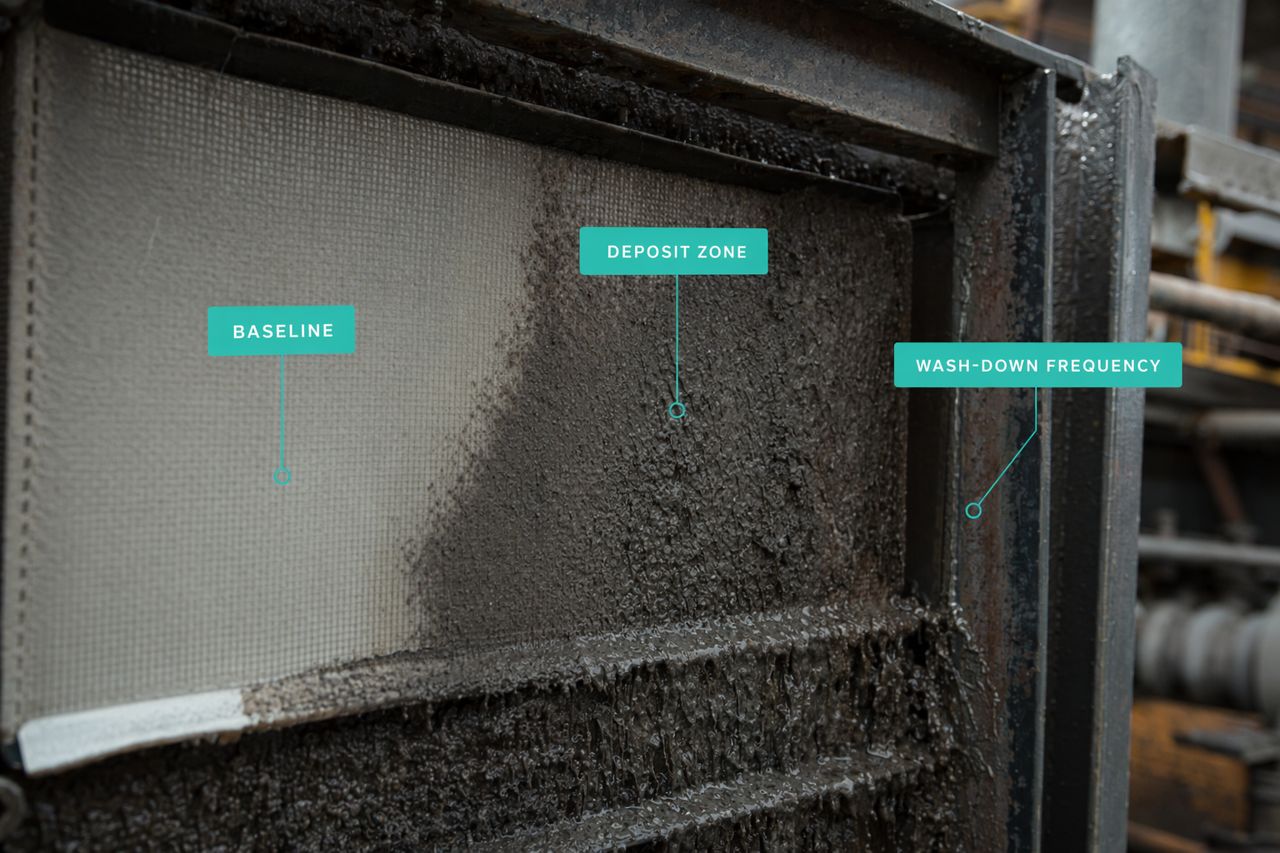
- Filter cloth showing rapid blinding after a dose change
- Screens, sprays, and launders collecting gelatinous fines
- Clarifier or pond water showing slow secondary settling
- Tailings water recycle quality shifting after ore blend changes
The objective is not to blame the polymer first. The objective is to document whether the circuit is carrying excess organic polymer, whether the polymer is interacting with fines or other reagents, and whether an enzyme-based cleanup adjunct has a defined role.
Supplier checklist: what to document before recommending cleanup chemistry
1. Map the circuit before and after the overfeed event
Start with the actual water and slurry routing, not the design drawing alone. Document where flocculant is added, where overflow reports, which streams recycle, and which downstream unit operations saw performance changes.
Capture:
- Polymer make-down location and transfer route
- Dosing point, injection quill condition, and mixing energy
- Thickener, clarifier, pond, or paste system configuration
- Reclaim water destinations, especially flotation, grinding, leach, and filtration
- Any bypasses, temporary hoses, or emergency operating changes
- Time between the dose change and the downstream symptom
This establishes whether the issue is a one-time slug, a continuing overfeed, or a circulation problem where residual polymer keeps re-entering the process.
2. Record the polymer and co-reagent environment
Polymer overdose behavior depends on polymer type and the chemistry around it. A cleanup recommendation should be built around the actual reagent environment.
Document:
- Polymer charge character, form, and intended application
- Make-down quality and hydration condition
- Coagulants, pH modifiers, collectors, frothers, depressants, dispersants, antiscalants, biocides, and oxidants in the same water path
- Contact with acid, alkaline, saline, cyanide-bearing, or high-sulfate streams
- Known reagent changes made during the same operating window
- Whether the mine changed ore blend, clay content, or fines load
For enzyme-based options, compatibility screening is essential. StrataFlux evaluates the likely exposure environment so the cleanup chemistry is not positioned where it will be neutralized, over-stressed, or commercially misapplied.
3. Separate overdose from make-down failure
A high polymer dose is not the only cause of sticky carryover. Poorly hydrated polymer, fish-eyes, aged solution, contamination, or shear damage can create symptoms that look like overfeed.
Field questions to include in your report:
- Did the polymer solution show gels, lumps, or stringing before injection?
- Was the make-down water quality stable?
- Did the solution age beyond the site’s normal practice?
- Were transfer pumps, eductors, or mixers changed?
- Was the dosing pump calibrated after the complaint?
- Did the control signal, stroke setting, or dilution water flow drift?
If make-down failure is the driver, the cleanup plan may need to address deposits and residual carryover while the primary correction remains mechanical or procedural.
4. Identify where the polymer is causing value loss
Not every overfeed event requires enzyme intervention. A supplier should prioritize circuits where residual polymer is creating measurable operational cost, reagent conflict, or customer downtime.
High-value targets include:
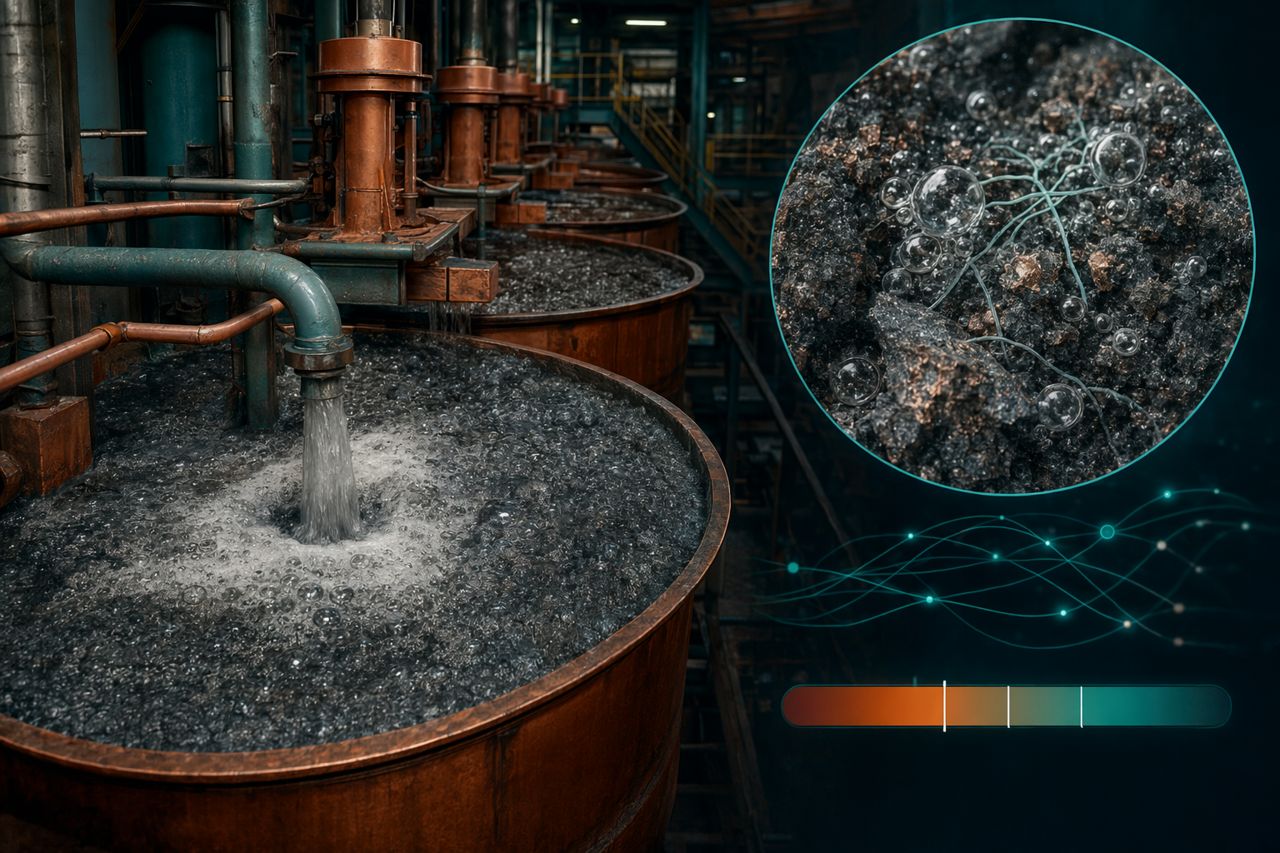
- Flotation support: reclaim water carrying residual polymer into flotation can change froth mobility, entrainment behavior, and surface response. Track whether symptoms follow return-water routing.
- Leach optimization: organic carryover into leach preparation or heap-leach solution handling may alter wetting, fines movement, pond behavior, or filtration upstream of solution management.
- Slurry conditioning: polymer-rich water can increase viscosity, promote sticky agglomerates, or interfere with downstream conditioning chemistry.
- Tailings treatment support: overfeed can affect water release, beach behavior, pond clarity, and reclaim stability.
- Filtration and screening: residual polymer and fine solids can form films that reduce throughput and raise wash-down frequency.
The strongest trial cases connect the cleanup option to plant pain: throughput restriction, water clarity loss, reagent interference, maintenance burden, or recovery risk.
Visual indicators worth photographing
Your field file should include image evidence. Photograph the same location before, during, and after corrective action whenever possible.
Useful visuals include:
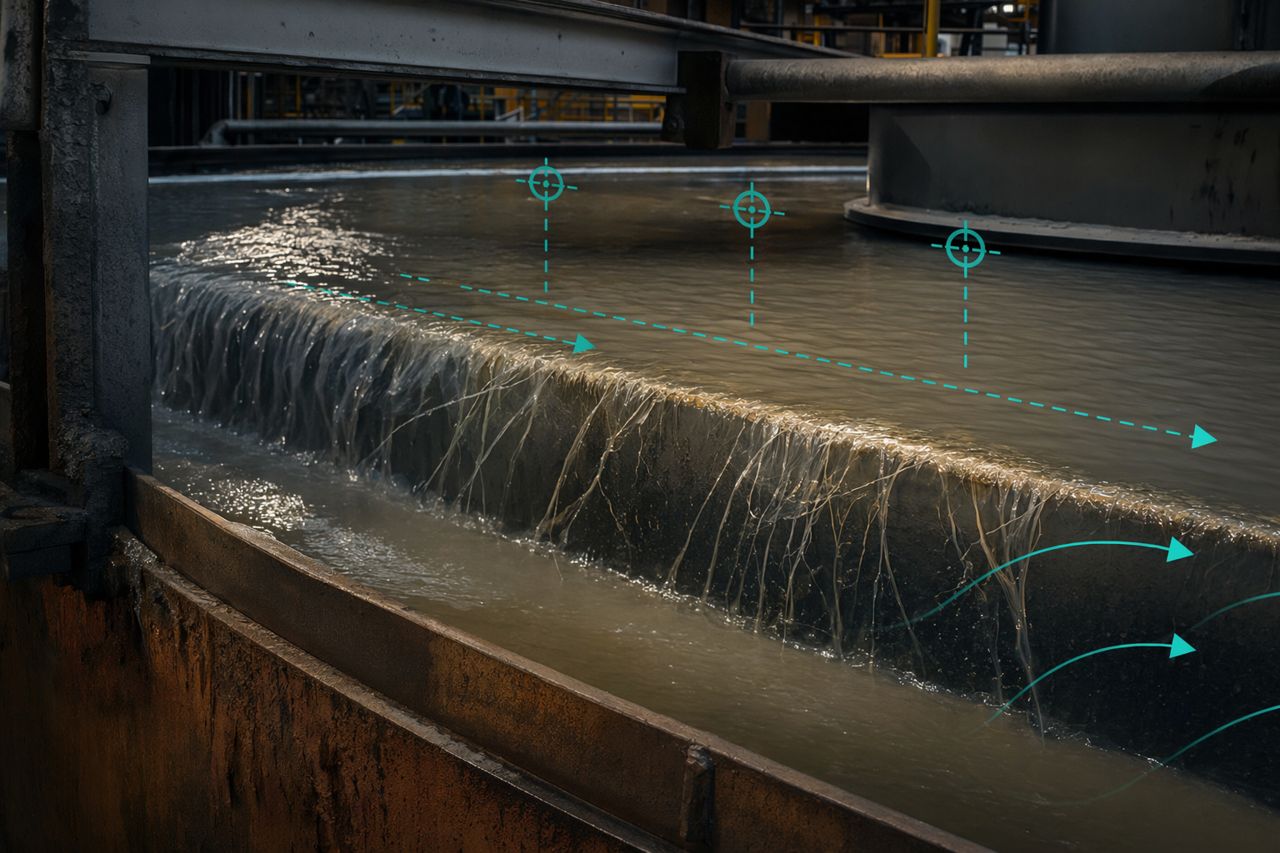
- Thickener overflow, feedwell, and launder condition
- Floc structure in a clear sample container
- Foam, stringing, or surface films in return water
- Filter cloth condition before wash-down
- Screen blinding or spray nozzle fouling
- Pipe spool, valve, or pump deposits during maintenance
- Side-by-side settled samples from affected and unaffected streams
Photographs help a technical sales manager explain the problem internally, align with mine operations, and justify a structured cleanup trial rather than an improvised chemical addition.
Trial design: what a controlled cleanup evaluation should include
A cleanup trial should never begin with “add product and watch.” Suppliers need a controlled baseline, defined endpoints, and a stop condition.
Baseline before treatment
Document the corrected operating condition first. If the flocculant dose is still excessive, cleanup chemistry may only mask the real issue.
Baseline items:
- Current polymer dose setting and correction made
- Water route and recycle status
- Visual carryover level
- Settling behavior
- Filtration drag or wash frequency
- Froth stability where reclaim water enters flotation
- Deposit recurrence rate on problem surfaces
- Any customer constraints around pH, temperature, metals, salinity, or reagent exclusions
Treatment window
Define where the cleanup adjunct will contact the problem stream and how long the mine can maintain stable conditions.
Document:
- Target stream and reason for selection
- Expected residence time before downstream impact
- Mixing condition and access limitations
- Temperature and pH range during the trial
- Co-reagents present during exposure
- Planned sampling points before and after treatment
- Operational events that could invalidate comparison, such as ore blend change or plant shutdown
Evaluation endpoints
Choose endpoints the customer already recognizes. For most mine water circuits, practical endpoints are more persuasive than complex lab language.
Track:
- Reduction in visible stringing, film, or gelatinous carryover
- Improvement in settling profile or overflow appearance
- Lower frequency of filter cloth blinding or screen wash-down
- Improved return-water handling in flotation or slurry conditioning
- Reduced deposit formation in known foul points
- No new negative interaction with collectors, frothers, depressants, leach chemistry, or tailings treatment chemistry
This is where StrataFlux adds value: we help suppliers define an enzyme cleanup trial that fits the circuit and the customer’s operating reality.
Compatibility cues for enzyme-based cleanup products
Enzyme solutions can be useful where a supplier needs a targeted organic cleanup adjunct, but they must be matched to the process environment. Mine circuits are not gentle water systems. Salinity, pH, temperature, metals, suspended solids, oxidants, and reagent mixtures all matter.
When discussing a StrataFlux option, provide:
- Circuit pH range and temperature range
- Water source and recycle percentage
- Polymer family and approximate exposure location
- Contact with oxidants, biocides, strong acid, strong alkali, or cyanide-bearing streams
- Presence of flotation reagents, leach reagents, scale-control products, or defoamers
- Whether the treatment goal is water clarification, surface cleanup, deposit reduction, or downstream interference reduction
We do not position enzyme cleanup as a substitute for correct flocculant selection, make-down discipline, or dosing control. It is best considered when residual polymer and organic fouling remain after the primary cause is identified and corrected.
Commercial documentation suppliers should keep
A good field response protects the relationship and supports repeatable sales. Your report should be concise, visual, and decision-oriented.
Include:
- Customer site, circuit, date, and operating context
- Complaint description in the customer’s words
- Reagent list and recent changes
- Polymer system inspection notes
- Water and slurry routing map
- Photos of symptoms and trial points
- Baseline observations before cleanup treatment
- Trial conditions and constraints
- Performance observations tied to plant value
- Compatibility notes and any exclusions
- Recommendation for follow-up, scale-up, or no-go
This record helps your sales, technical service, and formulation teams avoid repeating assumptions across sites.
When to bring StrataFlux into the discussion
Bring StrataFlux in when the customer has corrected the obvious dosing or make-down issue, but residual polymer carryover, sticky deposits, or downstream reagent interference continue to create cost.
Good fit scenarios include:
- A supplier needs an enzyme-based cleanup adjunct for a defined mine water stream
- Polymer carryover is affecting flotation support, filtration, slurry conditioning, leach preparation, or tailings water management
- The customer requires compatibility review before any additional chemistry enters the circuit
- The supplier wants a structured trial protocol and technical language for the mine’s metallurgical or process team
- The application needs rugged, field-aware guidance rather than generic wastewater positioning
Request a quote
If you are evaluating flocculant overfeed cleanup for a mine customer, send StrataFlux the circuit notes, polymer context, water chemistry range, symptom photos, and trial objective.
Request a quote through the on-site form and our technical team will review the application fit, compatibility considerations, and recommended next step.